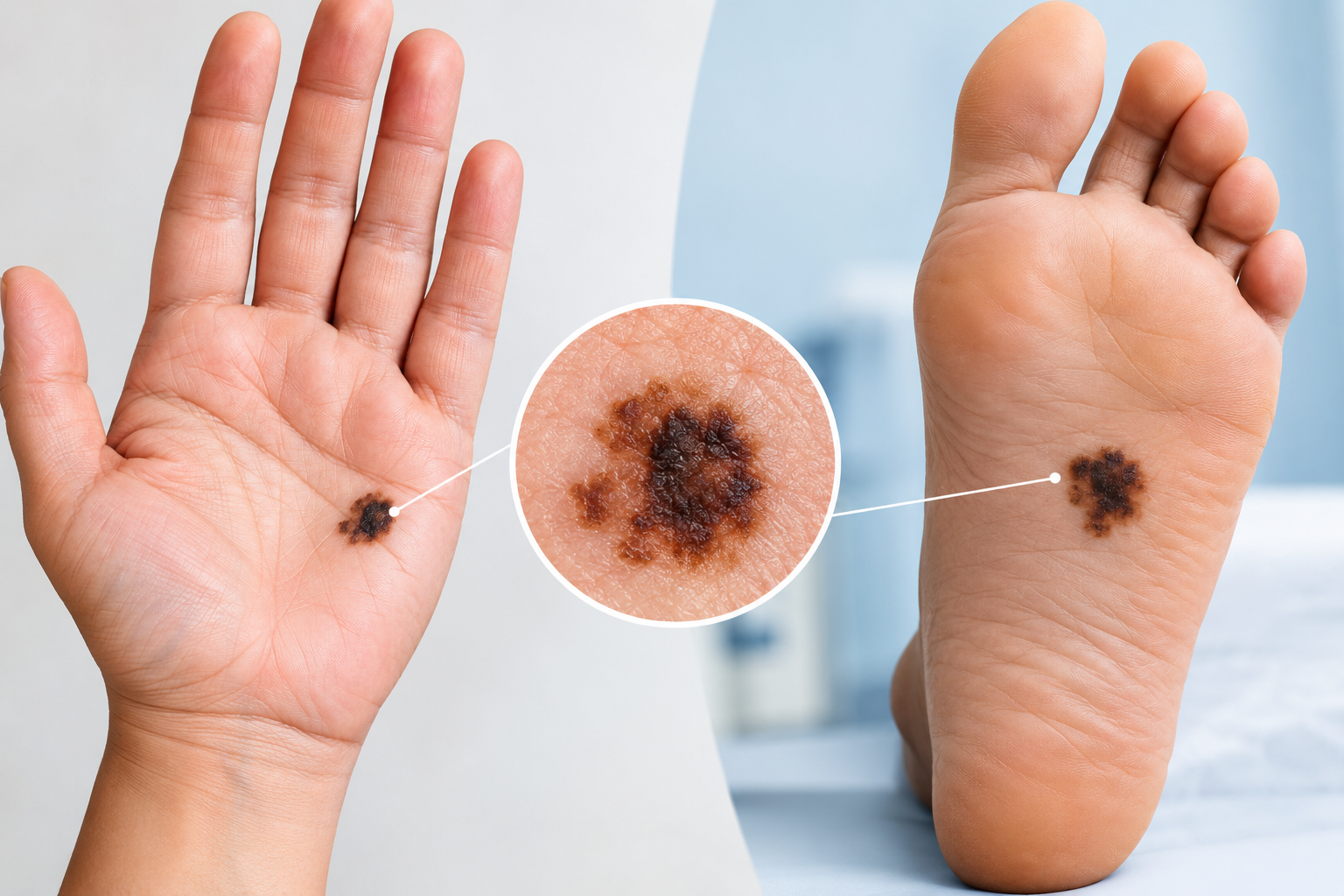
Acral Lentiginous Melanoma: The Skin Cancer on Palms and Soles
Most people picture skin cancer as something caused by years of sun exposure, found on the face, shoulders or arms.

Finding out that your skin cancer screening has flagged a suspicious lesion can feel unsettling, but it’s an important step toward protecting your health. At Station Road Medical Centre, a trusted medical center Ipswich residents rely on, our team walks every patient through the process calmly and clearly, so you always know what comes next and why each step matters.
A “suspicious” result doesn’t automatically mean cancer — it simply means a spot needs closer attention. Common reasons a lesion is flagged include:
Once a lesion catches the doctor’s eye, they’ll usually examine it more closely using a dermatoscope, a handheld magnifying tool that reveals structures invisible to the naked eye.
If the lesion still looks concerning, your doctor will recommend a biopsy — removing a small sample of tissue for laboratory analysis. This is the only way to confirm whether cancer cells are present.
| Biopsy Type | What It Involves | Best Suited For |
|---|---|---|
| Shave biopsy | Top layers of skin shaved off | Surface-level lesions |
| Punch biopsy | Small circular tool removes a deeper sample | Lesions needing full-thickness assessment |
| Excisional biopsy | Entire lesion removed with a margin | Suspected melanoma |
You can read more about how a skin biopsy helps diagnose skin cancer early or what a punch biopsy involves.
Biopsy results typically take one to two weeks. During this time:
Once results are ready, one of our doctors will explain them in plain language.
Treatment depends on the type, size, and location of the cancer. Options offered by doctors in Ipswich at our clinic may include:
| Treatment | Recovery Time | Typical Use |
|---|---|---|
| Cryotherapy | Days | Superficial, early lesions |
| Surgical excision | 1–2 weeks | Confirmed BCC/SCC/melanoma |
| Mohs surgery | 1–2 weeks | Face, ears, sensitive areas |
| Photodynamic therapy | Several days | Actinic keratosis, superficial BCC |
Even after successful treatment, regular monitoring is essential.
Learn more about mole mapping and early detection or what to expect at your first skin cancer check appointment.
As a trusted skin cancer clinic Ipswich families turn to, our experienced doctors combine advanced diagnostic tools with compassionate, patient-first care.
Meet our team on the our doctors page, or explore our skin cancer information hub for further reading.
1. Does a suspicious lesion always mean skin cancer?
No. Many suspicious lesions turn out to be benign after biopsy, but testing is the only way to know for certain.
2. How long does it take to get biopsy results?
Most results are available within one to two weeks, depending on the laboratory.
3. Is a biopsy painful?
A local anaesthetic is used, so most patients feel only mild pressure during the procedure.
4. What happens if the biopsy confirms cancer?
Your doctor will discuss suitable treatment options based on the cancer type, size, and location.
5. How often should I get a skin check after treatment?
Most patients are advised to have a follow-up check every 6 to 12 months, or sooner if new changes appear.
6. Can I book a skin cancer screening at Station Road Medical Centre?
Yes, appointments can be made directly through our online booking page.
If you’ve noticed a suspicious spot or are due for a skin cancer screening, don’t wait to get it checked. Reach out to our friendly team at Station Road Medical Centre today.
Call us: (07) 3816 1155
Email: admin@srmcbooval.com.au
You can also visit our contact page for directions and opening hours, or explore our day procedure skin cancer clinic services for more information.
Most people picture skin cancer as something caused by years of sun exposure, found on the face, shoulders or arms.
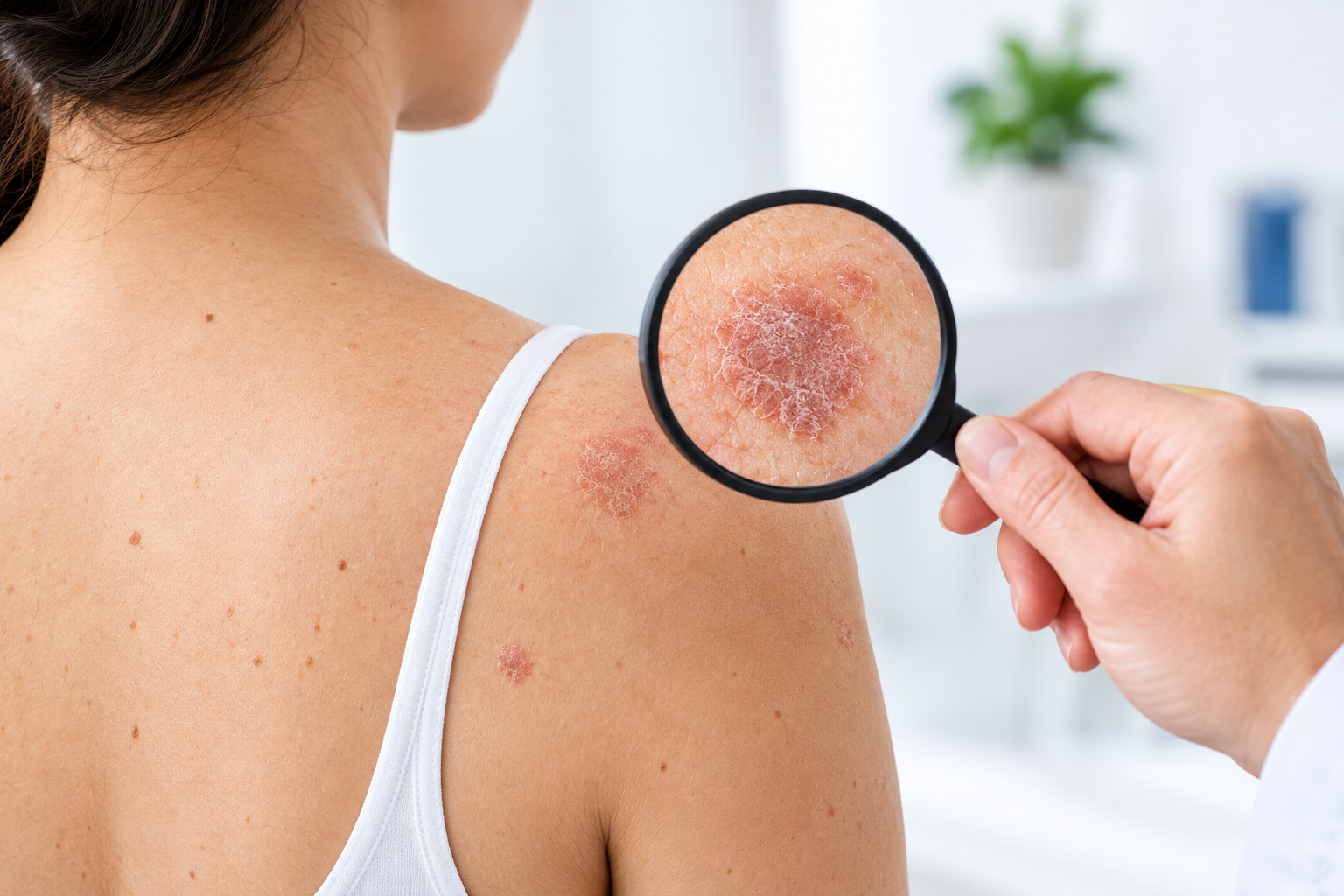
Noticing a rough, red, flaky patch on your skin can be unsettling, especially in Queensland, where sun exposure is part
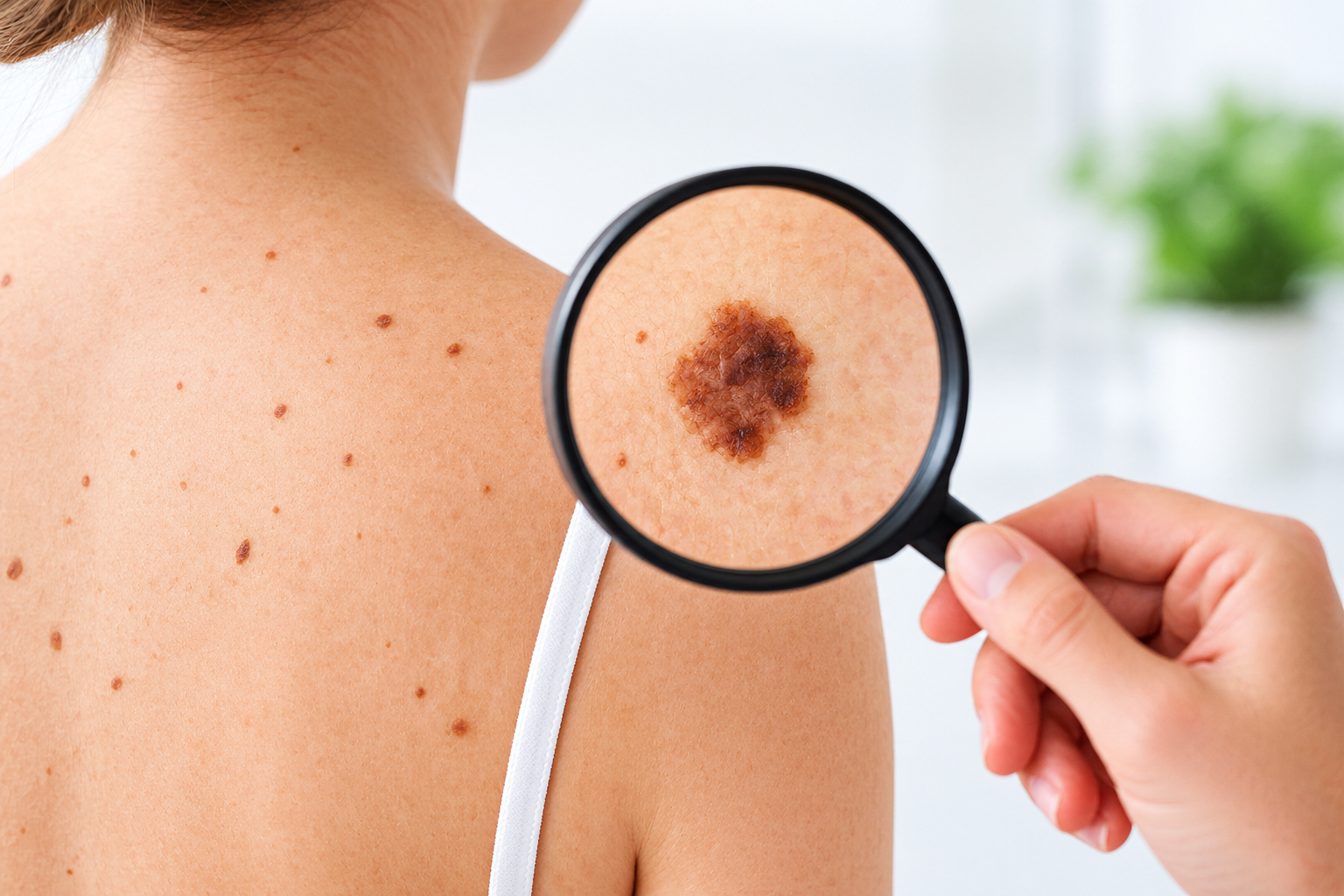
Most people have a few moles they have never thought twice about. But when a mole looks different from the


